Effect of cosmetic products on the organisation of skin lipid barrier

Revealing stratum corneum structure and molecular interactions using advanced X-ray technology

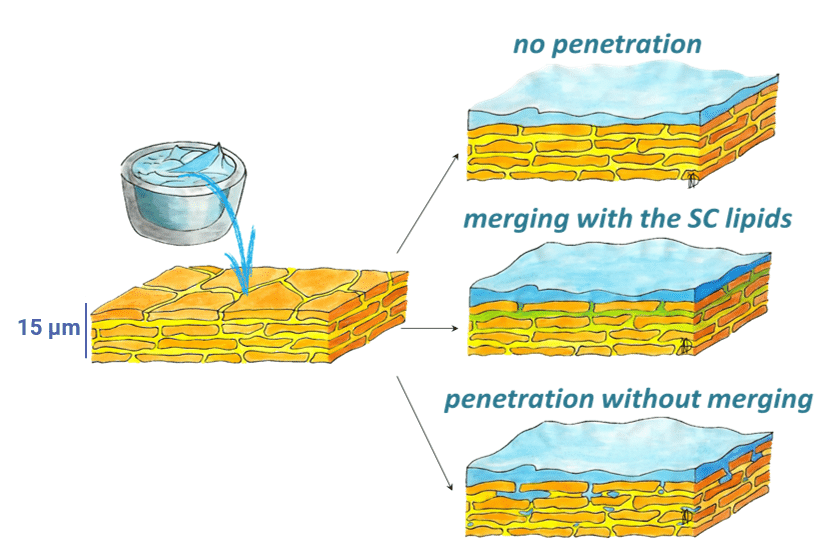
schémas illustrant la pénétration d'un produit à travers le stratum corneum
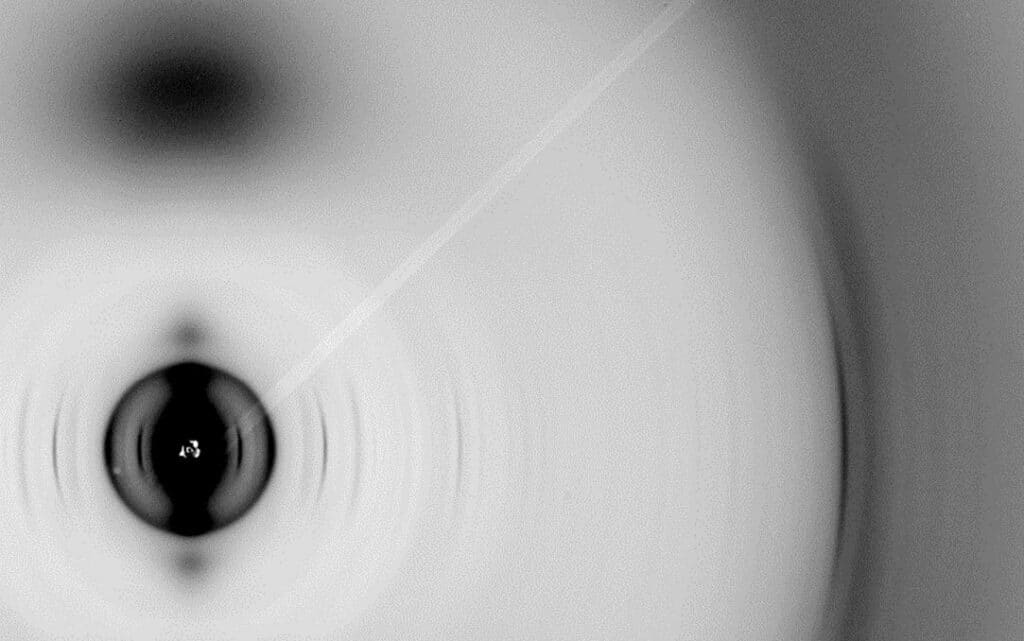
signal de microdiffraction RX

Novitom explains why and how looking at intercellular lipids in the stratum corneum, in an article published in Cosmetic Testing News.

Why study intercellular lipids in the stratum corneum?

The barrier function of the stratum corneum (SC) is intrinsically linked to the organisation of its intercellular lipids. Characterising and monitoring this organisation is therefore essential for understanding and quantifying the effects of cosmetic products and treatments on skin barrier integrity.

The physiological lipid matrix, composed primarily of ceramides, free fatty acids and cholesterol, is arranged into complex lamellar structures aligned parallel to the corneocyte surface. Within these lipid layers, highly ordered crystalline domains coexist with less organised amorphous regions.

Assessing the molecular organisation of SC lipids following treatment provides valuable insights into a product’s ability to penetrate the skin, reinforce barrier function, improve skin nutrition, or modify the physical properties of the stratum corneum.

How can lipid structure be characterised?

Several analytical techniques are routinely used to investigate SC lipids, including differential scanning calorimetry (DSC), Raman spectroscopy and transmission electron microscopy (TEM).

  • DSC and Raman spectroscopy provide information on lipid phase behaviour, indicating whether lipids are predominantly in a crystalline or fluid state.
  • TEM enables visualisation of lipid lamellae between corneocytes. However, observations are limited to very small sample areas and provide little information on the lateral organisation of lipid chains within individual layers.


To obtain a more comprehensive understanding of lipid architecture at the molecular level, X-ray diffraction technique is required.

Case study: molecular effects of a mass-market cosmetic cream

Following application of a commercially available cosmetic cream, consumers reported smoother and softer skin. X-ray microdiffraction analysis helped explain the molecular basis of this sensory perception.

Measurements revealed that the regular lamellar organisation of intercellular lipids was significantly disrupted at the outer surface of the stratum corneum, where the cream was applied. In contrast, lipid organisation remained largely unchanged in deeper regions closer to the epidermis.

This localised disruption of surface lipid organisation may contribute to the perceived softening effect, potentially by facilitating the desquamation process while preserving the integrity of the deeper barrier structure.

Conclusion

By combining synchrotron-based X-ray microdiffraction with micrometre-scale spatial resolution, Novitom provides an advanced analytical platform for investigating the molecular organisation of the stratum corneum and the mechanisms by which cosmetic products interact with skin lipids.

The technology offers a unique opportunity to bridge formulation science, efficacy evaluation and claim substantiation through direct measurement of structural changes within the skin barrier.

FAQ. Why choose diffraction to support both product developement and claim substantation?


Which parameters, as measured by X-ray diffraction, reveal the skin-product interaction?

X-ray diffraction provides detailed information on:

  • Lamellar organisation, including layer spacing and orientation.
  • Lateral molecular packing within lipid layers.
  • The balance between crystalline and amorphous phases.
  • Crystal lattice structures and polymorphism.
  • The size and distribution of ordered lipid domains.

As these parameters exhibit relatively low inter-individual variability, they represent robust biomarkers of skin barrier quality and are particularly valuable for monitoring structural changes induced by cosmetic products and treatments.


What’s Novitom’s expertise in  micrometre-scale X-ray Diffraction

To enhance the relevance of X-ray diffraction for cosmetic research, Novitom has developed proprietary measurement protocols based on the exceptional capabilities of synchrotron X-ray sources.

This approach enables:

  • Data acquisition at micrometre-scale spatial resolution.
  • Structural mapping throughout the depth of the stratum corneum, from the skin surface to the epidermal interface.
  • Analysis of isolated SC samples following ex vivo treatment.
  • Investigation of topically applied formulations directly on isolated SC.
  • Evaluation of tape-strip samples, making the technology compatible with clinical studies.


How can we understand how skincare products work?

Beyond structural characterisation, X-ray microdiffraction provides mechanistic insights into how cosmetic products interact with the skin barrier.

The technique can:

  • Determine whether a treatment preserves or alters the native organisation of SC lipids.
  • Identify modifications in lamellar structure, crystalline packing and overall lipid crystallinity.
  • Differentiate between products that integrate with endogenous skin lipids and those that remain segregated within the SC.

Such information is highly valuable for understanding formulation performance and supporting mechanism-based product development.


How to support both product development and claim substantiation?

X-ray microdiffraction offers formulators a powerful tool for rational formulation optimisation by providing direct evidence of how ingredients and finished products interact with the skin barrier at the molecular level.

In parallel, the resulting data can support scientifically substantiated marketing claims related to barrier reinforcement, nourishment, repair and skin conditioning.

What type of information can be obtained using X-ray diffraction?

  • Product penetration into the stratum corneum
  • Product interaction with the SC lipids
    • merging with the SC lipids
    • fluidization vs crystallisation
    • filling empty pores
  • Effect on the keratin
  • Effect vs depth and/or time
  • Surface film characterisation

Further articles related to skin and hair care products

Quantifying dermal collagen organisation with AI-assisted AFM

Quantifying dermal collagen organisation with AI-assisted AFM

A new approach for assessing skin ageing and treatment…

Anti-aging skincare seen through collagen fibres organisation

Anti-aging skincare seen through collagen fibres organisation

Novitom has developed an original test based on the…