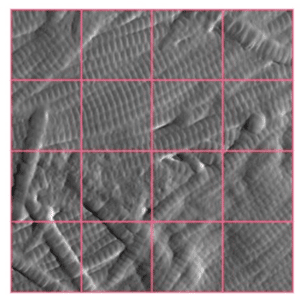
An AFM image of skin collagen showing 16 sub-images for subsequent scoring using a pre-trained AI algorithm.

Quantifying dermal collagen organisation with AI-assisted AFM

A new approach for assessing skin ageing and treatment efficacy Understanding how collagen organisation changes with age remains a major challenge in skin research. While macroscopic alterations can be identified at the fibre bundle scale using conventional histology, many of the most significant age-related modifications occur at a much finer

More »
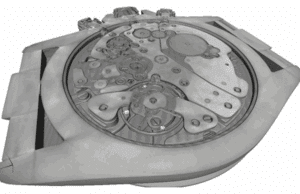
volume tomographique révélant d'intérieur d'une montre

Why choose X-ray tomography or microCT?

X-ray tomography is now a reference method for non-destructive three-dimensional imaging. Its principle is based on capturing a large number of X-ray images from different angles, which are then combined digitally to reconstruct the internal structure of an object. Tomography, which has become essential in various fields such as material

More »

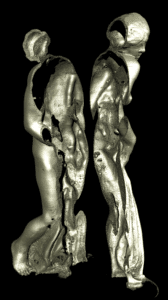
Searching for clues to authenticate a statuette

Searching for clues leading to the authentication of a work of art is a complex process that requires consideration of all aspects of the work, including artistic and historical aspects, of course, but also the materials used. For statues, the difficulty lies in the fact that the interior is not

More »
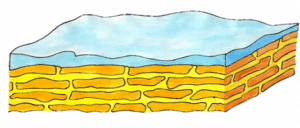
dessin illustrant la structure du stratum corneum et le dépôt d'un produit cosmétique en surface

Unveiling the impact of topical formulations on the organisation of skin lipid barrier

X-ray diffraction reveals the structural organisation of the intercorneocyte lipids in the stratum corneum X-ray microdiffraction (µXRD) unveils the structural organization of the intercorneocyte lipids in the stratum corneum : Lamellar stacking (SAXS) => layer thickness and organization quality Crystalline and fluid structures inside the lipid layers (WAXS) => hexagonal/orthorhombic/amorphous

More »
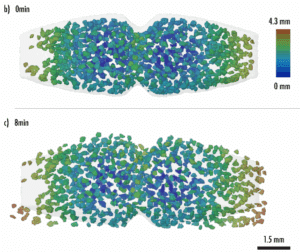
principe actif rendu visible en 3D par microCT au cours de la dissolution d'un comprimé

Revealing the hidden structure of tablets with synchrotron X-rays

A recent study conducted by Xploraytion, Novitom, Merck, and their partners demonstrates how synchrotron X-ray microtomography (SR-µCT) is transforming the analysis of pharmaceutical tablets. Published in the International Journal of Pharmaceutics, this study shows how the internal structures of tablets can be visualized in 3D and in real time. The

More »
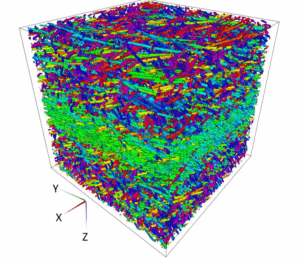
visualisation 3D de l'orientation des fibres dans un polymère composite par tomographie RX

3D characterisation of fibres orientation in a composite

The images from X-ray microtomography (μCT) allow for advanced analyses at the fiber level: composites, fabrics, plants, paper. We have developed algorithms dedicated to high-resolution image analyses in order to calculate the orientation fields of fibers in samples or complete parts. The material is probed ‘as-is’, without the need to

More »
Volume 3D colorisé illustrant la segmentation des phases et grains dans du ciment.

Why choose microCT to study granulometry?

X-ray microtomography (micro-CT) images enable advanced particle size analysis, allowing the characterisation of the size, shape, and spatial distribution of particles, pores, or inclusions that make up one or more phases of a material. The material is probed “as is” , i.e. without the need for conditioning. The three-dimensional nature

More »
repésentation 3D des écarts géométriques entre la pièce dessinée et la pièce contrôlée

Comparison of the scanned full volume of a part with its CAD model

High-resolution, high-energy X-ray tomography provides non-destructive access to the entire part, including internal areas that are inaccessible to other techniques. NOVITOM has developed an algorithm for comparing the CAD part with the volume reconstructed by tomography obtained on the manufactured part. The image next to this text is a 3D

More »

3D localisation and visualisation of cracks

Microtomography enables the non-destructive detection and 3D visualization of cracks. It accurately quantifies the size, shape, and volume of cracks, including their propagation depth. This volumetric measurement capability allows for the assessment of structural integrity, the monitoring of degradation progression, and the optimization of materials. Essential in R&D, it helps

More »