Ceramics and glass

Inspection of complex components and microstructure analysis

Our analysis laboratory combines cutting-edge techniques and recognised expertise to meet your glass and ceramic characterisation needs: routine testing, process validation or advanced investigation for R&D.

As a trusted partner, we help you solve your problems: controlling critical defects (porosity, cracks, inclusions), characterising microstructures, evaluating the effects of ageing and optimising your processes to improve reliability in service.

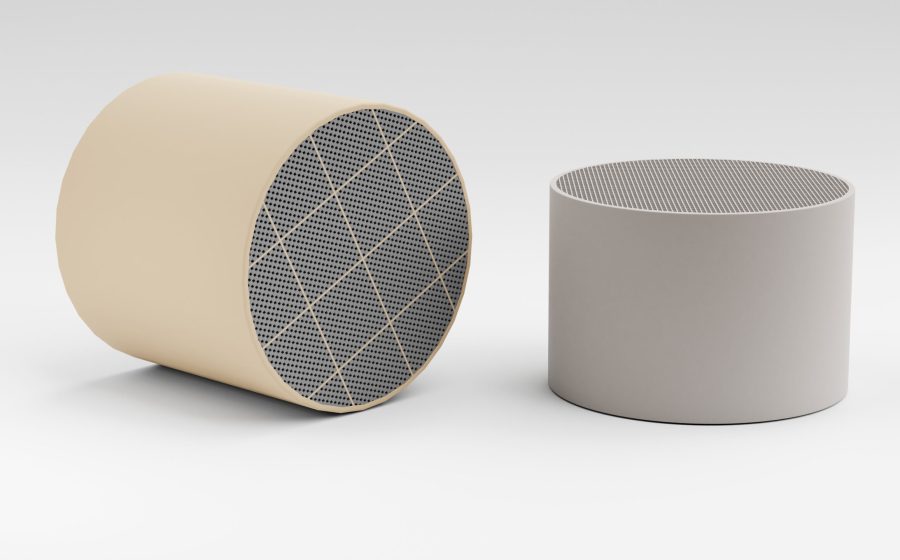
3D render of NOX converter and DPF particulate filter which are used in pair to reduce diesel engine emissions.

Our ceramic analysis services

We help you understand and master your technical ceramics through a wide range of services:

  • Microstructure and grain size analysis
    Precise identification of crystalline and amorphous phases
  • Characterisation of dopants, additives and impurities
  • Analysis of multiphase interfaces: e.g. ceramic-metal, composites
  • 3D detection and quantification of cracks, porosity and internal defects
  • Inspection and characterisation of ceramic coatings (TBC, anti-wear layers)
  • 4D monitoring of densification during sintering
    process validation: sintering, 3D printing, protective coatings
  • Measurement of residual stresses to prevent cracking

Our glass analysis services

  • Detection and 3D mapping of bubbles, porosities and inclusionsAnalysis of the structural homogeneity of glass
  • 2D/3D mapping of the distribution of dopants and colourants
  • Monitoring of vitrification, crystallisation and relaxation mechanisms by in situ diffraction
  • Measurement of residual stresses after tempering or annealing
  • Quality control of glass processes: tempering, annealing, sol-gel deposits, thin films
  • Study of corrosion and ageing of glass

Examples of 3D characterisation of materials and components

3D localisation and visualisation of cracks

3D localisation and visualisation of cracks

Microtomography enables the non-destructive detection and 3D visualization of…

Types of analysed ceramics and glass

We work with a wide range of glass and ceramic materials, in the form of powders, solid samples, thin films or complex assemblies:

  • Silicate glasses: soda-lime glasses, borosilicate glasses, optical glasses, speciality glasses (laboratory, nuclear)
  • Glass-ceramics: glass-crystal composite materials used in biomedical, electronic and optical applications
  • Technical ceramics: alumina, zirconia, silicon carbide, silicon nitride, boron carbide
  • Advanced ceramics for energy: SOFC, refractory materials, thermal barriers
  • Bioceramics: HAP, calcium phosphate, implants and prostheses
  • Ceramic powders: control of raw materials for sintering, additive manufacturing or deposits
  • Glass or ceramic coatings: plasma deposits, anti-wear layers, thermal barriers
  • Archaeological and heritage ceramics: pottery, fragments, glazes, enamels, engobes, varnishes, altered ceramics

The advantages of NOVITOM

Reliable and rapid analyses

Analyses carried out on state-of-the-art equipment by a team of experts.

Tailor-made approach

An approach tailored to your constraints, with a technical contact person who supports you from start to finish.

Clear results

Actionable results thanks to detailed reports and 3D visuals that facilitate decision-making.

Our techniques for characterising ceramics and glass

Non-destructive 3D characterisation

  • Micro-tomography (µCT): 3D imaging with micrometer resolution
  • Synchrotron micro-tomography (SR-µCT): ultrafast and high-precision 3D
  • In situ tomography (4D): dynamic tracking under stress
  • Synchrotron nano-tomography: resolution down to 50 nm


Chemical Analysis and Elemental Mapping

  • Micro-X-ray Fluorescence (µXRF): 2D, non-destructive chemical mapping
  • SEM/EDX: surface observation and 2D chemical mapping
  • X-ray Spectroscopy: oxidation state, monitoring of chemical transformations


Diffraction and crystallographic analyses

  • X-ray/neutron diffraction: measurement of residual stresses and texture
  • Powder diffraction: phase identification and crystal structure
  • DCT: 3D crystal orientation and grain mapping


Atomic scale and nano-characterisation

  • AFM: Surface topography, local mechanical properties
  • SAXS: Analysis of nanopowders and nanostructures
  • TEM: Analysis of crystal defects and interfaces